Friday, October 19, 2007
The bus ride
The other day after work I was waiting for my bus, the 26. It was late which isn't that unsual and when it did arrive I hopped on. As usual, we wove around downtown Seattle before heading to Fremont. About halfway to Fremont I began to read a book that I bring with me to pass the time. The Fremont stop is usually the largest and this day was no different -- about half of the passengers exited the bus in the self-proclaimned center of the universe. My own stop in Wallingford is about 10 minutes after Fremont, so I went back to reading my book. After a few minutes I glanced up to see if we were getting close to my stop and much to my surprise I did not recognize my surroundings. I'm new to this particular bus route and so I'm not too alarmed at this point. It's perfectly feasible that I'm not very familiar with the surroundings on my new route, especially at night, right? Wrong. I definetly was in an area of Seattle that I did not recognize. I was now faced with the unpleasant task of walking to the front of the bus to confess my ineptitude to the bus driver. In the silent bus I made my way forward after everyone who was stopping had cleared out. Amidst the silence on the bus was the tangible anticpation of the expetant passengers waiting for the driver to resume their journey. I cut through the silence with my bold and ignorant question, "This isn't the 26, is it?" The driver had a somewhat perplexed and amused expression on his face when he told me that no, I was on the 28. He told me to exit here and then wait for the 28 headed back to Fremont on the other side of the street. Like a big boy, I looked both ways before crossing but I was a little scared since I didn't have anyone's hand to hold. How could this happen? Most distressing was that I didn't even recognize where I was. Deep down though I think I know the reason that I was in such an unfortunate position. I was distracted reading my book, The Idiot.

Monday, October 15, 2007
I guess it's not all dead rabbits.
 I'm glad that beauty does exist in Radiohead's personal world after all. I'm not an apologist for the band; I haven't liked their last three records. However, there is something unique about one of the biggest and most critically respected bands in the world announcing that in ten days they will be offering their latest record as a download for a consumer determined price. And it is beautiful (the music that is). Some advice to any prospective crooner's out there: don't try to sound like Thom York because, you can't.
Saturday, September 8, 2007
Wednesday, August 22, 2007
Sincere Repentance
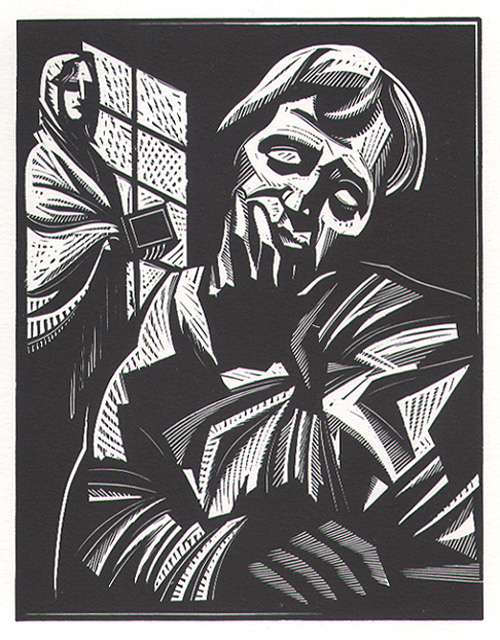
Long before the phrase "hooker with a heart of gold" had entered into the American lexicon, Dostoevsky wrote Crime and Punishment with Sofya Semyonovna Marmeladov as your proto-hooker. However, her story might be a little less sanitary than your average Hollywood tart; she chooses to become a prostitute by profession since her father is a drunk who can't hold a job down, her mother is suffering from consumption and as a result her younger siblings are going hungry. Certainly no R-rated T and A here but nonetheless her plight is a bit of a downer.
Crime and Punishment is the latest Dostoevsky novel that I'm re-reading and as with The Brothers Karamazov before it, I'm getting a lot more out of the book the second time around. The novel features the story of Raskolnikov (which comes from the Russian word raskoknik and translates to schismatic), a young man who, as a matter of practicality, takes justice into his own hands and commits murder against a woman who by his judgment is deserving of such a fate.
What unfolds is the story of Raskolnikov's tribulation, regeneration and eventual repentance. I won't even attempt to give a recap to the books many events, which includes a crazed dream in which an angry mob beats an old horse to death with a crowbar, as well as a particularly moving scene (portrayed in the picture above) in which the Gospel story of Jesus' raising of Lazarus is read to Raskolnikov by Sofya. Suffice it to say that the themes of human depravity and hope in the midst of suffering are fully explored in the novel (one of Dostoevsky's many achievements is his ability to relate such widely ranging events without seeming to make compromises designed to serve a particular idealogy - each event unwinds naturally in an authentic and unforced manner).
Raskolnikov is a character that I can relate to. I believe that part of the human condition is our struggle to make sense of events that unfold in our lives or the lives of others that offend our own concept of justice. And it is a fine line between authentically expressing our suffering and becoming angry and bitter as a result of it. Raskolnikov responds to the absence of his own concept of justice (and God) by protesting against it in the act of murder. Intrinsically tied up in this protest is Raskolnikov's infatuation with his own ego: he fancies himself to be an elite member of society who transcends human law and is thereby allowed to commit heinous acts such as murder as long as they are in service of the greater good of society. Sound crazy? Yeah, it does to me as well. It also hits a little too close to home.
I have often thought of repentance primarily in terms of negation; repentance is a word that conjures up all kinds of images and for me they are mostly negative. I've blogged about the subject of repentance before but it is something that I am returning to again and again - the concept of repentance not primarily in negative language as I had perceived it before, but positive. I can't say it better than Bishop Kallistos Ware:
"Correctly understood, repentance is not negative but positive. It means not self-pity or remorse but conversion, the re-centering of our whole life upon the Trinity. It is not looking backward with regret, but forward with hope - not downwards at our shortcomings but upwards at God's love. It is to see, not what we have failed to be, but by what by divine grace we can become; and it is to act upon what we see. To repent is to open our eyes to the light. In this sense, it is not a single act, an initial step, but a continuing state, an attitude of the heart and will that needs to be ceaselessly renewed up to the end of life (Ware, The Orthodox Way).In the novel Raskolnikov is not demonized - he is a character who in reality is quite sensitive and very concerned with the injustices committed against his neighbors in the world around him. However, he sins against God in turning to inner despair (negation in the form of murder) as a result of these perceived injustices. I think that this inner despair can often take more subtle forms than murder, perhaps even outwardly looking like Godliness but in reality may simply be a mask for our rampant pride and ego. In the end, what Raskolnikov felt would be an act of practicality to improve the world accomplished no such thing and was destructive to his own soul and person. It is only through a positive act (i.e. repentance - which authentically deals with the negative, our sin) that Raskolnikov begins the process of redemption to his soul and person.
Friday, July 20, 2007
Peppermint Dreams
Up until a few years ago, the White Stripes really bugged me. I had never really listened to the band before but Jack White was certainly annoying. He seemed to be an arty-farty freak who was self-conscious and full of himself and I thought the cameo he had in Cold Mountain was ridiculous.
At any rate, when the band released Get Behind Me Satan I decided to buy it since it was on sale at Best Buy. I ended up really liking the record. I subsequently bought their entire back catalog, blew out some speakers at the WorldMarket in Woodbury, MN listening to "The Nurse" before we opened, and even had a dream about the band. Previously, this was an U2-only level of band obsessiveness. I don't remember much of the dream, but an event that sticks out in my mind is when I tried to kiss Meg. I slowly leaned in and right before I gave Meg a smooch, her upper-lip grew hair on it and I realized I was about to kiss Jack instead. This part of the dream could also be classified as a nightmare. I may be running the risk of being too intimately personal on the 'ol blog, but if nothing else it gives you a glimpse into the fragile state of my psyche at the time (it had been a rough couple've years).
At any rate, when the band released Get Behind Me Satan I decided to buy it since it was on sale at Best Buy. I ended up really liking the record. I subsequently bought their entire back catalog, blew out some speakers at the WorldMarket in Woodbury, MN listening to "The Nurse" before we opened, and even had a dream about the band. Previously, this was an U2-only level of band obsessiveness. I don't remember much of the dream, but an event that sticks out in my mind is when I tried to kiss Meg. I slowly leaned in and right before I gave Meg a smooch, her upper-lip grew hair on it and I realized I was about to kiss Jack instead. This part of the dream could also be classified as a nightmare. I may be running the risk of being too intimately personal on the 'ol blog, but if nothing else it gives you a glimpse into the fragile state of my psyche at the time (it had been a rough couple've years).
A few weeks ago the band released a new album Icky Thump. I won't give a full review of the record, but a few highlights include the title track, "Rag and Bone," and the weird and wild "St. Andrew (This Battle is in the Air)." This track continues the vague spirituality that has always been present in the White Stripes repertoire, from their covers of old blues spirituals to thanking several Saints in the liner notes of Get Behind Me and the Apostles in the notes of Icky Thump.
I have found the live performances of the White Stripes to be a pretty incredible burst of energy and chemistry between the manic over-the-top energy of Jack and Meg's innocent and primal work on the skins. Yee-haw.
Monday, June 25, 2007
The Cross, The Crescent and St. Mark's Cathederal

Recently here in Seattle an event that has caused quite a stir is the news that Episcopal Priestess Ann Holmes Redding is both a practicing Muslim and a Christian. Hmmmm.
The linked article provides some commentary from scholars who agree and disagree with her position. There is part of me that finds this sort of inter-faith (interpersonal interfaith?) stance appealing. Perhaps it could be seen as an attempt to "solve" or "reconcile" some of the horrifying violence and atrocities comitted by Christians and Muslims against one another the past 1400 years. Mutual forgiveness and dialogue is certainly needed and important.
But if Redding's aim to be a Christian and Muslim is a (sub)conscious attempt at reconciliation (I'm not sure that it is) does it truly acheive that? What does it acheive? What does it say about Christianity?
Saturday, June 16, 2007
Sportin' the 'stache
I have recently been inspired to go to a new world; a place where previously only rock stars, porn stars and middle aged men still living in the 1980s have dared to trod: I have grown a mustache. Undeterred by the threats of my fiance that she would find my physical appearance "absolutely disgusting," I have taken the plunge into the dangerous and uncharted waters of the 'stache. To those of you who may have not yet taken the leap into this realm: jump on in, the water is warm.
I found that a certain freedom accompanies the sporting of the 'stache. It may well appear as foolishness to some or even desperation to others, but with the 'stache I feel a sense of renewed personal identity. Do I look ridiculous? Maybe, even probably. Actually, who am I kidding - of course I do - but that just comes with the territory. It's part of the whole 'renewed personal identity' - it doesn't matter what I look like, right? I'm hip because I've transcended style, 'I don't care anymore' (of course, this sense of freedom could also quite easily be my dishonest attempt to mask my true feelings of insecurity and ridiculousness as I walk around in public with a mustache).
It is no conincidence that at the appearance of my mustache, Olivia happens to be gone for the weekend visiting friends. And it remains to be seen whether I will keep my mustache for her return or even for Church tomorrow morning for that matter. At any rate, my upper lip will rest well this evening in the warmth of the 'stache. While I am embarassed that I am blogging about such a subject on a Saturday night (or any subject for that matter), it was for a good purpose. I think.
I found that a certain freedom accompanies the sporting of the 'stache. It may well appear as foolishness to some or even desperation to others, but with the 'stache I feel a sense of renewed personal identity. Do I look ridiculous? Maybe, even probably. Actually, who am I kidding - of course I do - but that just comes with the territory. It's part of the whole 'renewed personal identity' - it doesn't matter what I look like, right? I'm hip because I've transcended style, 'I don't care anymore' (of course, this sense of freedom could also quite easily be my dishonest attempt to mask my true feelings of insecurity and ridiculousness as I walk around in public with a mustache).
It is no conincidence that at the appearance of my mustache, Olivia happens to be gone for the weekend visiting friends. And it remains to be seen whether I will keep my mustache for her return or even for Church tomorrow morning for that matter. At any rate, my upper lip will rest well this evening in the warmth of the 'stache. While I am embarassed that I am blogging about such a subject on a Saturday night (or any subject for that matter), it was for a good purpose. I think.
Subscribe to:
Comments (Atom)